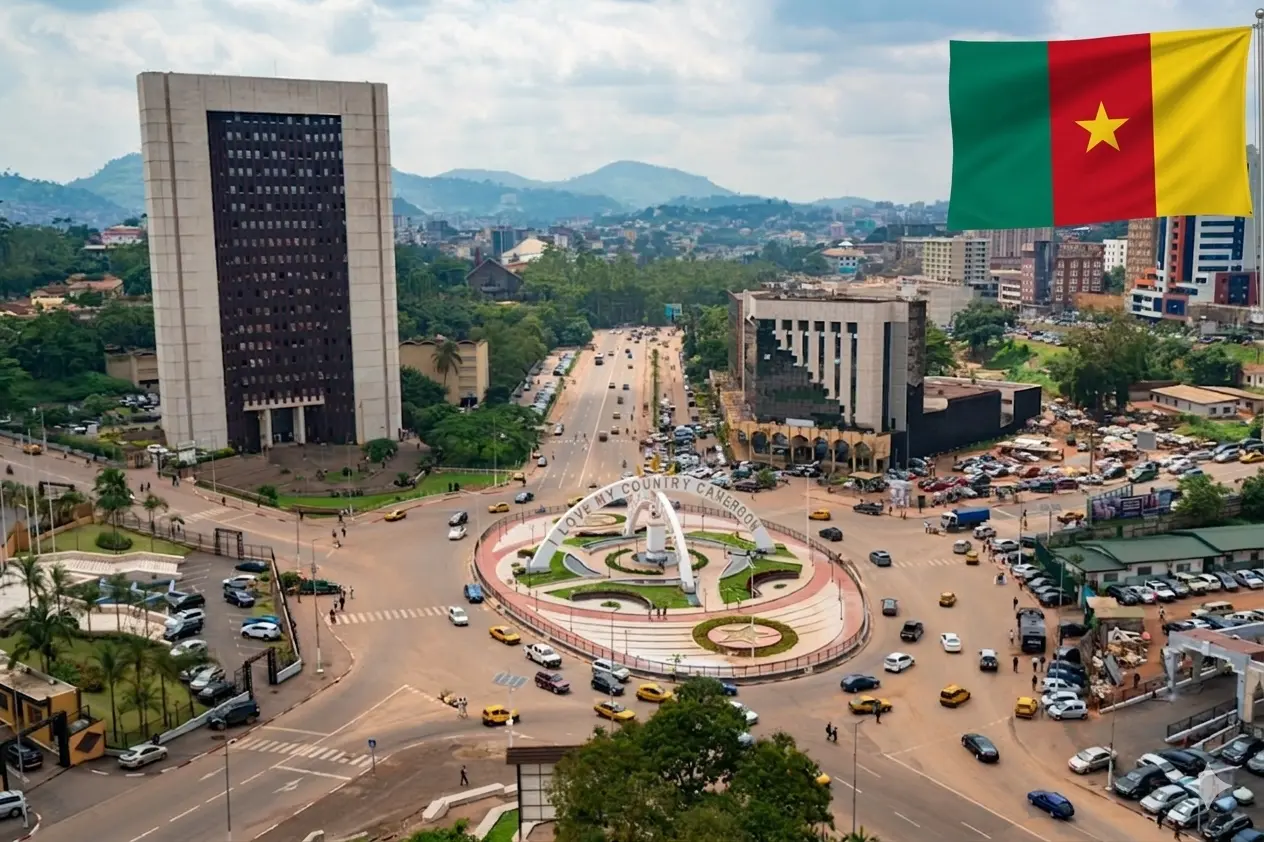
Bamenda’s road transformation continues months after Pope Leo XIV’s visit, as projects backed by Cameroon, France, AFD and the World Bank reshape the city and fuel public optimism
By Magnus Ful from Bamenda, Cameroon
For years, poor roads were part of everyday life in Bamenda. Today, construction activity across the city is giving residents a different reason to look at their streets.
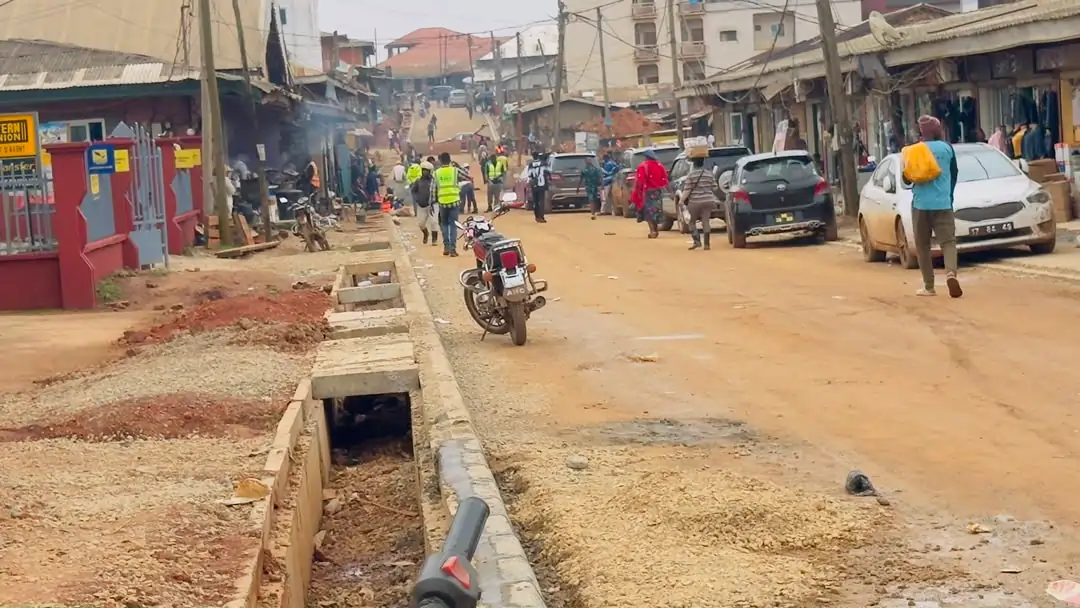
Heavy equipment remains on site. Drainage structures are taking shape. Road surfaces are being prepared. Residents are watching the changes closely, while content creators document the progress for audiences far beyond the city.
The transformation did not begin with Pope Leo XIV’s visit.
By the time the Pope arrived in Bamenda on 16 April 2026, major road projects had already secured financing and entered implementation. His visit brought international attention to the city. The construction, however, was part of a broader infrastructure process already underway.
Two major projects, different financing
Bamenda’s road works are not one single project. They involve several interventions supported through different financing arrangements.
The first major intervention is the C2D Regional Capitals Programme, implemented within Cameroon’s cooperation framework with France through the French Development Agency, AFD.
A major financing milestone came on 18 April 2024. During a visit to Bamenda, the Minister of Housing and Urban Development, the French Ambassador and AFD representatives signed a note of intent for the construction and rehabilitation of urban roads and drainage infrastructure.
The programme then moved into its technical implementation phase. According to the Ministry of Housing and Urban Development, a technical kick-off meeting chaired by Governor Adolf Lele Lafrique on 13 August 2024 marked the technical launch of the major works.
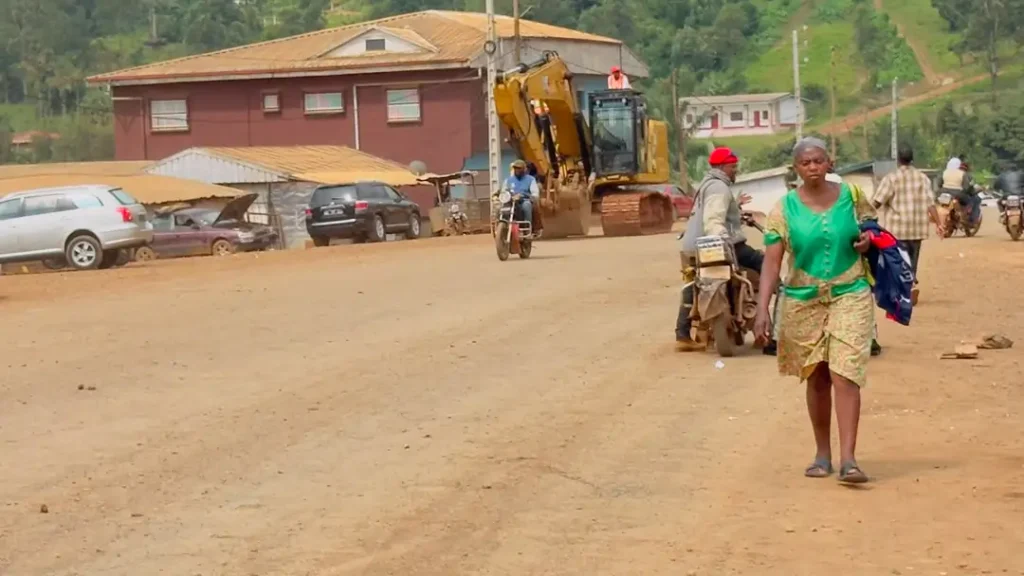
The programme is expected to deliver more than 18 kilometres of urban roads. The planned routes include Bamenda City Council Road, Clifton Hotel to Ntambessi, GBHS Junction to Ndamukong, Prison Junction to BMM, Ndamukong to Farmers House, TAC to CAMCCUL, Veterinary Junction to BCC and Vicky Street.
The C2D programme also includes three major markets, pedestrian infrastructure, green spaces and extensions to the potable water network. The Ministry of Housing and Urban Development says more than CFAF 30 billion is being invested in Bamenda, including nearly CFAF 21 billion for roads. Its 2026 roadmap targets the reception of the city’s roads and market infrastructure by 31 December 2026.
The second major intervention is the Bamenda urban crossing
The 6.5 kilometre Bamenda urban crossing forms part of Lot 4B of the Babadjou-Bamenda road rehabilitation project. It is supported through additional financing approved by the World Bank on 14 June 2024.
The World Bank allocated US$50 million in additional financing for urban roads in the North-West Region. The Bank says the wider transport project is intended to improve transport efficiency and safety, strengthen connectivity and create better conditions for business and employment. It also links the improved corridor to stronger trade connections with neighbouring Nigeria.
By 19 July 2026, the urban crossing had reached 45.71% overall physical completion, according to the Ministry of Public Works.
General earthworks had been completed across 6.3 of the project’s 6.5 kilometres. Road construction was also advancing, with the formation layer completed on 4.9 kilometres, the platform on 4.1 kilometres and the foundation layer on 3.6 kilometres.
Drainage works were progressing alongside the road construction. A total of 6,210 metres of drains had been prefabricated, with 4,925 metres already installed. Prefabrication of the project’s 308 metres of culverts had been fully completed, while one hydraulic structure remained under construction.
The relocation of utility networks had reached 51.71%. The figures indicate continued progress across several construction fronts, with contractor Bun’s maintaining activity to sustain the pace of implementation.
A city watching its roads change
For residents who have lived with difficult roads for years, the works have become a daily source of attention and expectation.
Construction has also brought temporary disruption for drivers, traders and pedestrians. However, many residents see the inconvenience as part of a longer process that could improve mobility and access across the city.
The public mood is increasingly visible online
Bamenda-based content creators regularly film road construction and share updates with audiences outside the city. Their videos allow residents, former residents and members of the diaspora to follow the transformation in real time.
For people living elsewhere, these updates offer a direct view of a city changing street by street.
The Pope’s visit did not end the works
Pope Leo XIV’s visit brought Bamenda before an international audience on 16 April 2026.
L’Effort Camerounais also covered the Pope’s meeting for peace with the community at St Joseph’s Cathedral and the Mass at Bamenda Airport.
The visit generated renewed international attention for the city and its people. It also created a moment of heightened public interest in Bamenda’s ongoing transformation.
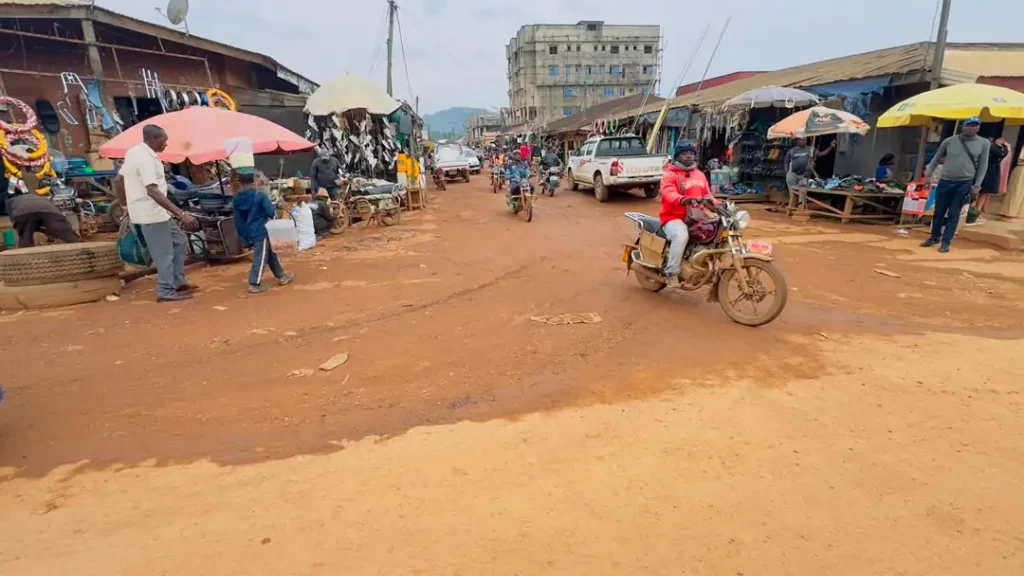
Some people expected the intense attention surrounding the visit to be followed by a slowdown in activity. Instead, construction has continued.
That continuity has strengthened public optimism. The road works are now part of a wider conversation about Bamenda’s future and the possibility of sustained urban development.
Beyond the roads
The significance of the projects extends beyond the immediate improvement of streets.
Bamenda is an administrative, commercial and educational centre in Cameroon’s North-West Region. Its links with the West Region and the wider national transport network give its infrastructure importance beyond the city.
The World Bank has linked improved transport infrastructure in the region to better connectivity, economic opportunities and trade with Nigeria. Meanwhile, the C2D programme combines road construction with markets and other urban facilities.
For residents, however, the transformation is experienced at street level.
It is seen in new road surfaces.
It is heard in the machinery working along busy routes.
It is followed through videos shared on social media.
And it is discussed by people who have waited for better urban infrastructure for years.
Hope built on continuity
The public excitement comes with clear expectations.
Residents want the projects completed. They want roads that improve mobility, support businesses and make it easier to reach schools, health facilities, markets and public institutions.
They also want the infrastructure maintained after construction.
For Cameroon and its international partners, the long-term test will therefore extend beyond building the roads. The projects must deliver the improved mobility, safety, connectivity and economic opportunities that underpin their financing.
For now, Bamenda is watching a transformation take place in real time.
Its residents are following the works from the streets.
Its content creators are documenting the progress.
People outside the city are watching online.
And the road works continue.