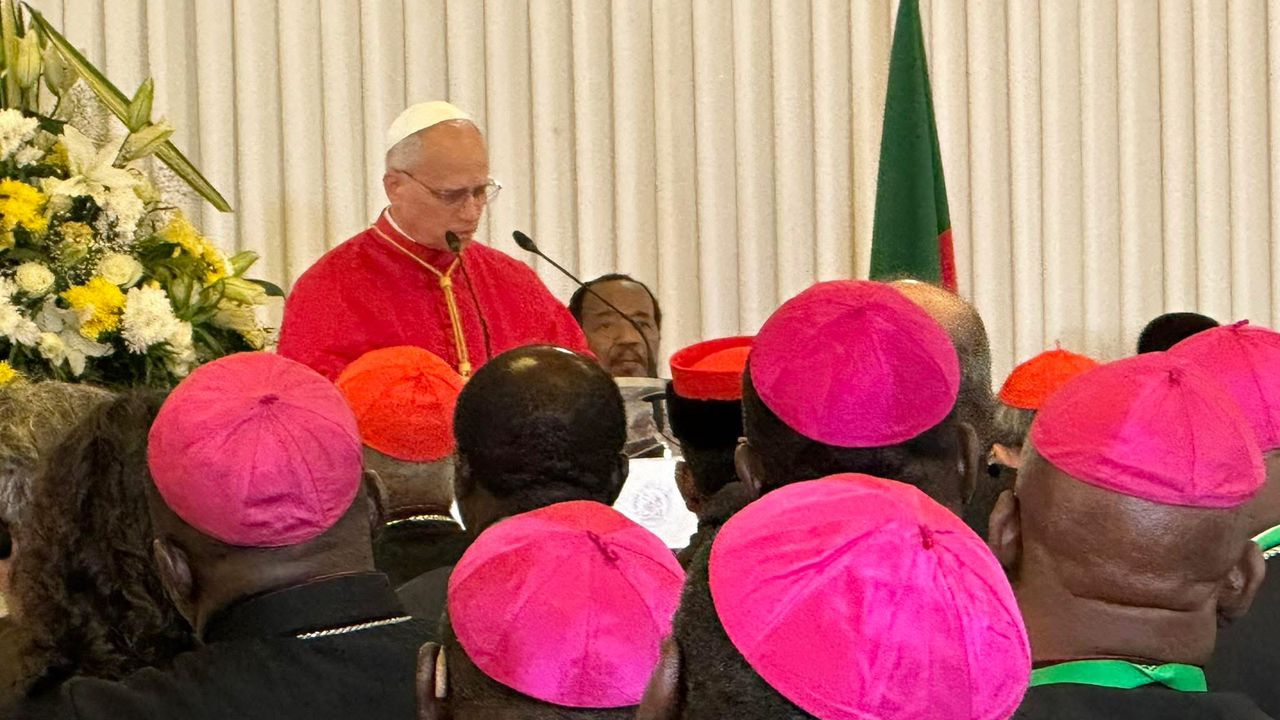
The Holy Father, on his first day in Cameroon on April 15, 2026, delivered a strong message linking governance, peace, and human dignity through two key speeches in Yaoundé.
By Magnus Ful
Pope Leo XIV set a clear tone from the very first day of his visit to Cameroon, combining a strong message on governance with a deeply human appeal for dignity and care. Through two major addresses delivered in Yaoundé, one to state authorities and another at the Ngul Zamba orphanage, the Pontiff presented a unified vision that connects political responsibility with the lived realities of vulnerable communities.
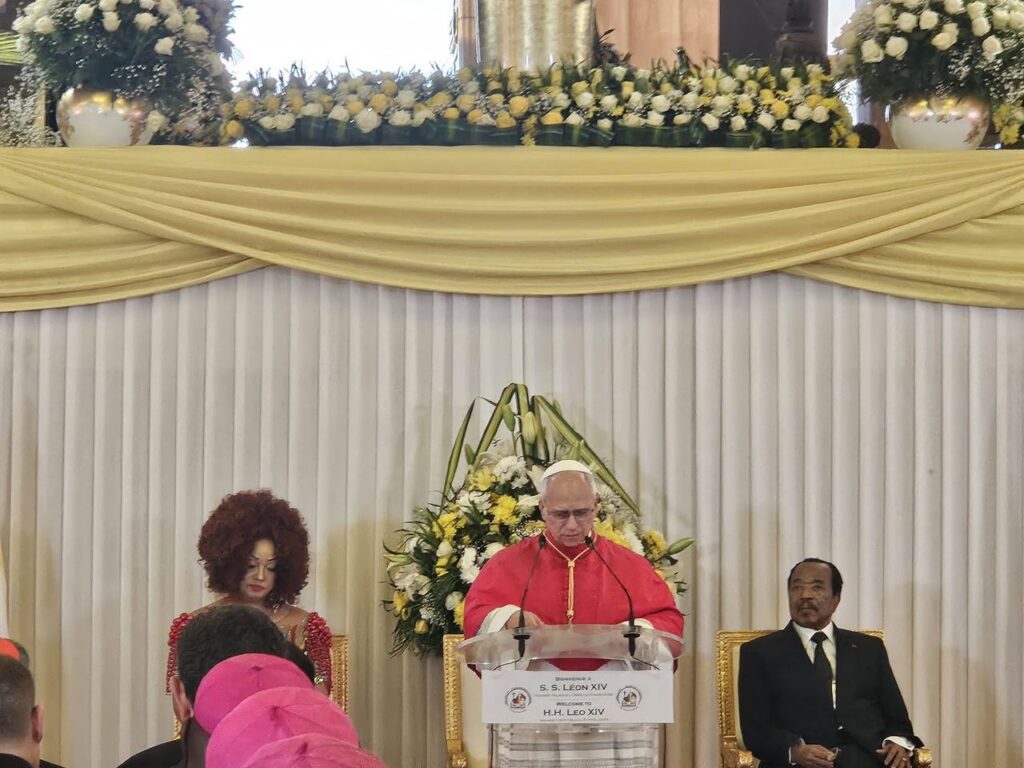
A Call for Responsible Leadership and Lasting Peace
Speaking before government officials, civil society, and the diplomatic corps, Pope Leo XIV delivered a direct and thoughtful assessment of the challenges facing Cameroon. He pointed to ongoing tensions in conflict-affected regions and highlighted the urgent need for peace rooted in justice, not force.
The Pope emphasized that leadership must be grounded in service, urging authorities to prioritize the common good, strengthen institutions, and rebuild public trust. His criticism of corruption and weak governance structures underscored the need for transparency and accountability as essential pillars of stability.
He also stressed the importance of involving citizens in decision-making processes, recognizing civil society as a key driver of national cohesion and conflict resolution.
A Message of Hope for the Most Vulnerable
Later that day, at the Ngul Zamba orphanage in Yaoundé, the tone shifted, but the core message remained consistent. Addressing children who have faced loss and hardship, Pope Leo XIV focused on hope, dignity, and the promise of a better future.
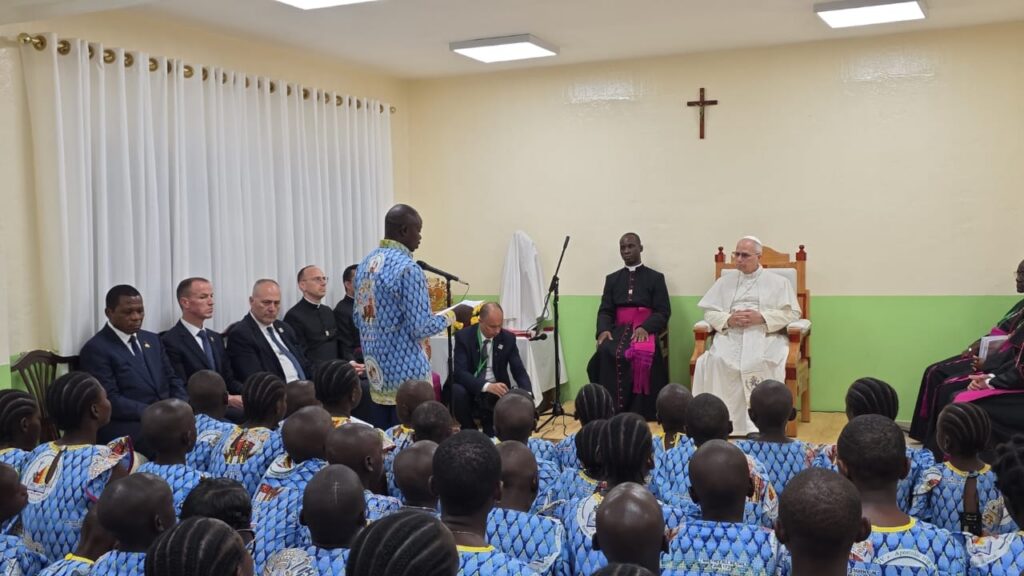
He acknowledged their suffering while encouraging them not to be defined by it. By affirming their value and potential, he reinforced a central theme of his visit, that every life matters, especially the most vulnerable.
This second address complements his earlier remarks by illustrating the human impact of broader national challenges. Issues such as conflict, poverty, and exclusion are not abstract, they directly affect lives, particularly those of children.
Together, these two speeches form a coherent framework for understanding Cameroon’s current reality. They link structural reform with social care, showing that lasting peace depends both on strong institutions and on compassion for those most in need.
By placing young people at the center of both messages, Pope Leo XIV highlights the country’s future as a shared responsibility. His first day in Cameroon was not just symbolic, it set a clear direction for dialogue, reform, and hope.